01 · The problem
You can't protect personal data you haven't found.
Most organisations don't know every table and bucket that holds personal data, which makes the DPDP Act's obligations impossible to plan for. Privacy OS starts with discovery and turns it into a sequenced plan with owners.
02 · What it does
Inside Privacy OS.
- 01
Discover and classify
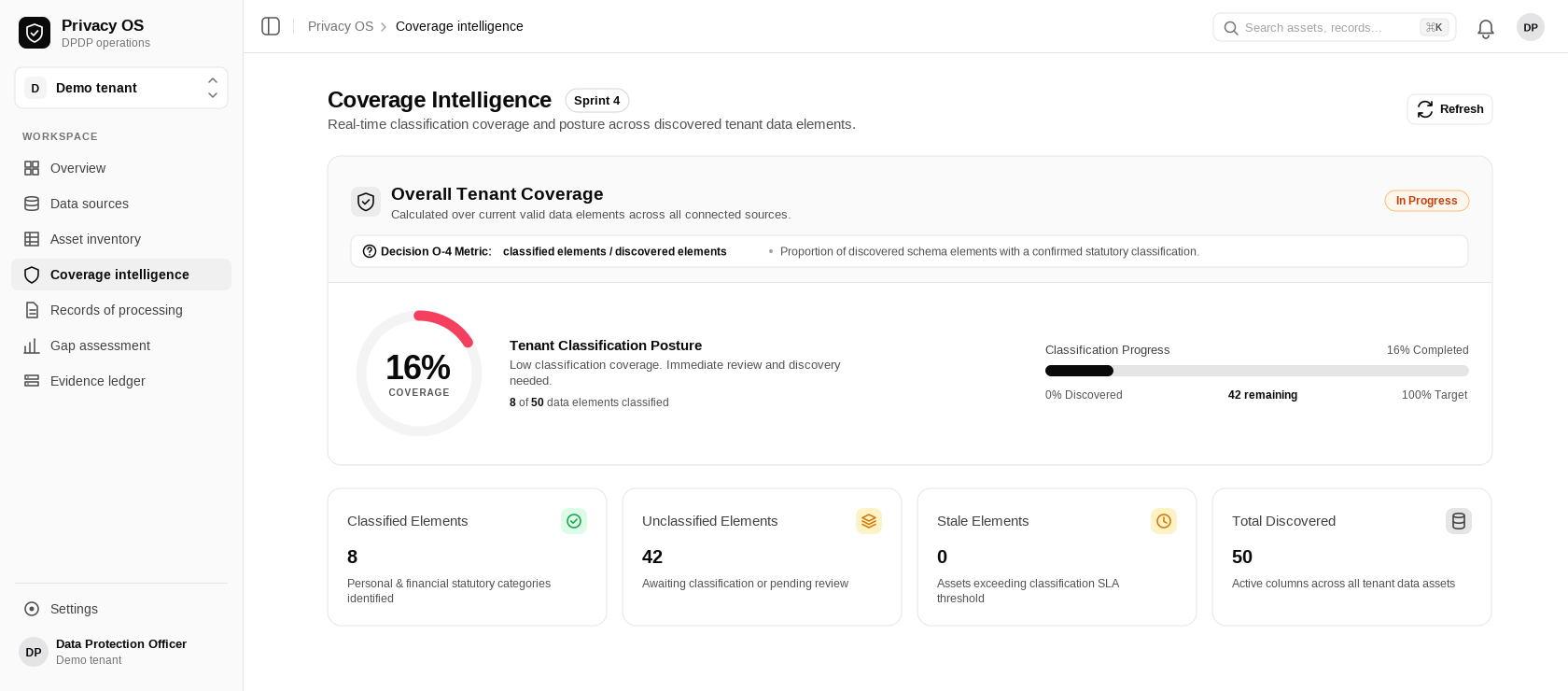
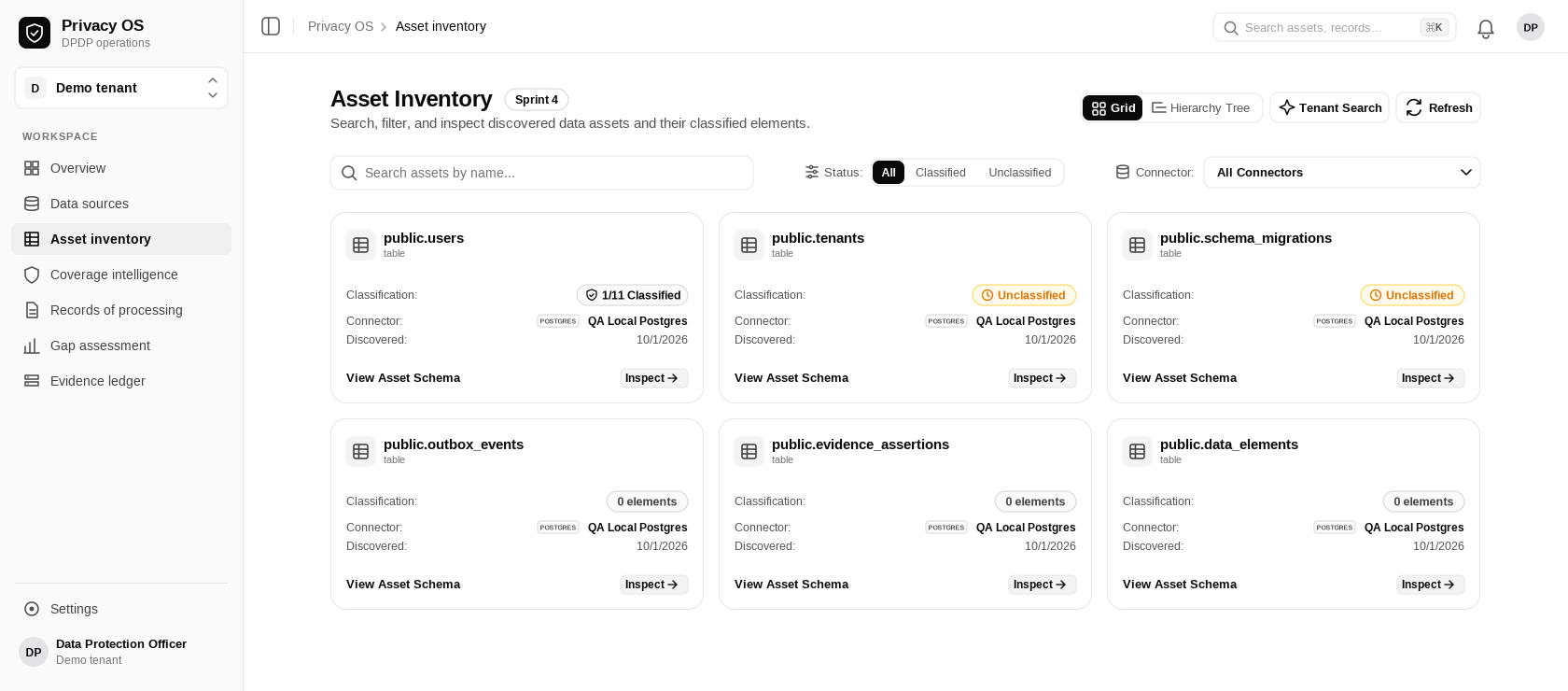
Tables and buckets are scanned and personal-data fields classified with confidence scores and Indian ID checks, with a published coverage figure for what was scanned.
- 02
Records drafted from evidence
Records of processing are drafted by AI from what was found; business owners confirm or correct them on their phone in minutes, so each record has an accountable owner.
- 03
Gap assessment with a rupee figure
Obligations are mapped to findings, with a sequenced remediation roadmap, a rupee figure on each exposure and a board-ready score.
- 04
Private by architecture
Personal data stays in an isolated per-tenant worker; only metadata and salted tokens leave it. Evidence sits in a tamper-evident ledger.
Please note
Technology for DPDP readiness, not legal advice. Using Privacy OS does not by itself make an organisation compliant. QLOAX is not a law firm or a government body, and there is no government DPDP certificate.